

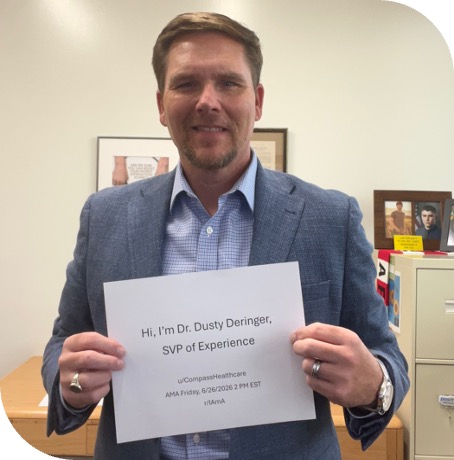
When Dusty Deringer, PhD, SVP of Experience at Compass Healthcare, hosted a recent Ask Me Anything (AMA) session, participants asked thoughtful questions about high reliability healthcare, operational excellence, patient safety, and the role support services play in healthcare.
While the discussion covered a variety of topics, one theme consistently emerged: the safest healthcare environments are built on thousands of reliable processes that often go unnoticed.
Healthcare support services create the operational foundation clinicians need to deliver safe, high-quality patient care. These services reduce risk, prevent errors, and strengthen patient safety throughout healthcare environments.
As healthcare organizations continue navigating increasing operational complexity, building a culture of reliability has become more important than ever.
BUILDING A CULTURE OF HIGH RELIABILITY HEALTHCARE
High reliability is often associated with preventing catastrophic events, but the concept extends far beyond responding to emergencies.
Organizations that consistently deliver safe, high-quality care focus on preventing problems before they occur. Rather than relying on individuals to catch mistakes, high reliability depends on standardized processes, continuous improvement, and a culture that encourages every team member to identify potential risks.
Support services contribute to this work every day through disciplined execution of routine tasks that collectively strengthen patient safety.
Whether preparing therapeutic meals, disinfecting patient rooms, maintaining building systems, or transporting patients throughout the hospital, consistency is essential. Small deviations from established processes can create larger risks if left unaddressed, making vigilance a key component of reliable operations.
MOVING FROM REACTIVE TO PROACTIVE OPERATIONS
One of the recurring themes during the AMA was the challenge of balancing immediate operational demands with long-term improvement.
Healthcare support teams regularly manage unexpected staffing challenges, equipment issues, changing patient needs, and other day-to-day operational pressures. While responding quickly is essential, organizations also benefit from creating systems that reduce the likelihood of future disruptions.
Standardized workflows, routine communication, frontline engagement, and ongoing process improvement help organizations spend less time reacting to problems and more time preventing them.
Near misses, workflow disruptions, and operational challenges can all provide valuable opportunities to strengthen systems before they affect patient care.
Organizations that embrace continuous improvement recognize that investing time in addressing root causes today can prevent larger issues tomorrow.
THE SAFETY WORK HAPPENING BEHIND THE SCENES
One of the most engaging parts of the AMA centered on the many ways support services protect patients without drawing attention to themselves.
Every patient meal requires careful coordination to ensure dietary restrictions, allergies, texture modifications, and nutritional needs are accurately addressed before reaching the bedside.
Environmental services teams follow evidence-based cleaning protocols designed to reduce infection risk throughout patient care areas.
Patient transportation professionals support safe transitions throughout the hospital while helping maintain patient flow and coordinating with clinical teams.
Facilities management teams maintain the complex infrastructure that allows healthcare environments to operate safely. This includes air handling systems, medical gas delivery, emergency power systems, and countless other building functions that support clinical care.
While patients may never see these processes in action, each represents an important layer of protection that contributes to safer, more reliable care.
RELIABILITY IS EVERYONE’S RESPONSIBILITY
Another important takeaway from the discussion was that high reliability is not owned by one department.
Creating safe, consistent healthcare environments requires collaboration across clinical and operational teams.
Support services professionals, clinicians, administrators, and frontline caregivers all contribute to a shared culture of accountability. Concerns are raised early, communication remains open, and opportunities for improvement are continuously identified.
Organizations that foster this collaborative mindset are better equipped to respond to changing conditions while maintaining high standards of quality and patient safety.
Reliability is ultimately built through the collective actions of individuals working toward the same goal.
LOOKING AHEAD
As healthcare continues to evolve, operational excellence will remain closely connected to patient safety and the overall care experience.
Support services are often viewed as behind-the-scenes functions, but their impact extends throughout every stage of the patient journey. From maintaining healing environments and supporting clinical workflows to preventing safety events before they occur, these teams help create the conditions necessary for high-quality care.
Reflecting on the discussion, Deringer emphasized that reliability is not achieved through isolated initiatives or occasional successes. It is built through consistent execution, continuous vigilance, and a shared commitment to doing the right thing every day.
Healthcare organizations that invest in strong operational systems and high reliability healthcare practices will be better positioned to deliver safer, more consistent care.
To view the full AMA session and explore our other AMAs, visit our Reddit page.