

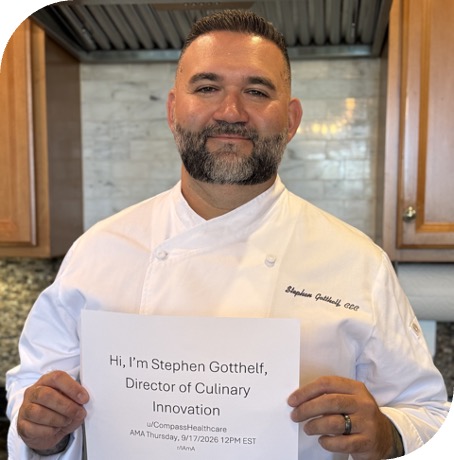
When Stephen Gotthelf, Director of Culinary Innovation at Morrison Healthcare, hosted a recent Ask Me Anything (AMA) in honor of Chef Appreciation Week, participants asked thoughtful questions about hospital food, culinary creativity, patient preferences, and the future of healthcare foodservice.
While the conversation covered everything from Coca-Cola-braised short ribs to global flavors and chef development, one idea remained central: healthcare foodservice teams should approach the hospital dining experience with the same care, creativity, and hospitality as any other dining experience.
For healthcare foodservice teams, preparing a meal is about more than meeting nutritional requirements. It is an opportunity to create comfort, support healing, and give patients something to look forward to during their stay.
REDEFINING THE HOSPITAL DINING EXPERIENCE
Hospital food has historically been associated with strict dietary requirements, large-scale production, and the need to deliver thousands of meals safely and efficiently. While those priorities remain essential, Gotthelf explained that flavor and hospitality deserve the same level of attention.
Patients compare every meal they receive with the food they enjoy at home, at their favorite restaurants, and through delivery services. Their expectations do not automatically change when they enter a hospital.
Rather than defending the reputation of hospital food, healthcare foodservice teams have an opportunity to give patients a reason to change their minds. That work begins with high-quality ingredients, thoughtfully developed menus, and meals designed around the needs and preferences of specific patient populations.
The goal is to create food that is not simply better than expected, but genuinely enjoyable.
CREATING FLAVOR THROUGH TECHNIQUE
When asked what dish might change someone’s mind about hospital food, Gotthelf described Coca-Cola-braised short ribs served with creamy, cheesy polenta and roasted broccolini tossed in toasted garlic.
Chefs slowly braise short ribs with rosemary, bay leaves, carrots, celery, onions, vinegar, and Coca-Cola, creating subtle sweetness and nostalgic flavor. After several hours, they pair the tender meat with creamy polenta and roasted broccolini.
For Gotthelf, the dish represents the kind of meal patients may not expect to find in a hospital. It combines comforting flavors with the care and attention associated with a great restaurant.
He also explained that building flavor does not always require adding more salt or fat. Chefs can use citrus, spices, acid, and umami to balance a dish and bring out the natural flavor of its ingredients.
Sometimes, a dish simply needs a small adjustment. A squeeze of citrus can brighten a recipe, while a pinch of salt can help emphasize the flavor of a protein. Exceptional ingredients and uncompromised talent is the key to our philosophy. We believe recipes can be replicated but talent can’t.
Our chefs know that small, intuitive decisions often transform a good dish into a great one. They may add extra caramelization to aromatics or finish a dish with fresh herbs before serving. A change in texture, temperature, or timing. Those adjustments come from experience, repetition, and knowing how ingredients should taste at their best.
That intuition is difficult to write into a recipe, but it is essential to great cooking. The recipe provides the foundation. The chef provides the judgment that brings it to life.
INVESTING IN CULINARY TALENT
One of the most rewarding surprises of Gotthelf’s work has been seeing how much healthcare foodservice has changed through its investment in culinary talent.
Many chefs join healthcare from restaurant backgrounds, bringing valuable experience in flavor, hospitality, and culinary technique. They then learn how to apply those skills within a healthcare environment, where nutrition, dietary requirements, patient safety, and operational consistency are equally important.
Gotthelf described a shift away from kitchens managed solely through a production mindset. Today, healthcare foodservice teams are investing in culinary leaders who care about the details, from whether a sauce needs more acid to whether a finished plate is something they are proud to serve.
That shift is helping create a stronger culinary culture across healthcare dining operations.
MAKING GLOBAL FLAVORS MORE APPROACHABLE
Culinary innovation also means introducing regional and global flavors in ways that chefs can confidently prepare and serve across healthcare facilities.
Gotthelf shared that one of the projects he is most excited about involves developing recipes and training resources that make global cuisines more accessible to chefs across the organization.
One example is a Dan Dan noodle recipe inspired by the flavors of central China. The dish includes ground pork, Sichuan peppercorns, chili crisp, ginger, scallions, soy sauce, and yu choy.
However, the recipe itself is only one part of the project. Training helps chefs understand how to prepare the dish and gives them the confidence to execute it consistently, regardless of where they work.
With healthcare foodservice teams serving more than 1,000 hospitals, creating a great recipe is only the beginning. The larger challenge is making sure that the same level of quality and intention can be delivered across a broad range of kitchens.
INNOVATION THAT WORKS IN A HOSPITAL KITCHEN
For Gotthelf, culinary innovation extends beyond creating new recipes. It also involves improving the dining experience and the way kitchens operate.
That includes incorporating seasonal ingredients, exploring global flavors, supporting responsible sourcing, and creating chef-driven concepts that feel current and authentic.
At the same time, every idea must be practical in a busy healthcare environment. Hospital chefs prepare meals for patients, visitors, and staff while leading teams and managing complex daily operations.
The most effective innovations are exciting enough to elevate the dining experience and practical enough to execute consistently. This balance allows healthcare foodservice teams to introduce new flavors while continuing to meet the nutritional, safety, and operational needs of the healthcare environment.
EVERY MEAL DESERVES CARE
Participants also asked whether physicians receive different food than the general public. Gotthelf explained that physician dining varies from hospital to hospital. Some facilities offer dedicated dining rooms or elevated menus, while others encourage physicians to dine in the same cafés and restaurants as patients, visitors, and staff.
Regardless of where a meal is served, every recipe should reflect the same commitment to quality, flavor, and hospitality. This approach also extends to specialized patient populations, including new mothers. By listening to preferences and cravings, foodservice teams create personalized meals that make hospital dining more exciting.
Whether a dish is served on a patient tray, in a retail café, or in a physician dining room, every meal matters. Each person receiving it deserves a thoughtful dining experience.
LOOKING AHEAD
As healthcare continues to evolve, foodservice will play an increasingly important role in how patients experience care.
The future of the hospital dining experience will depend on combining culinary creativity, nutrition, hospitality, and operational excellence.
Reflecting on the AMA, Gotthelf emphasized that changing the perception of hospital food happens one meal at a time. Every flavorful recipe, carefully selected ingredient, and thoughtful culinary detail creates another opportunity to improve the patient experience.
Through culinary innovation, Morrison Healthcare is helping reimagine what hospital food can be: nutritious, flavorful, practical, and an important part of the healing environment.
To view the full AMA session and explore our other AMAs, visit our Reddit page.