

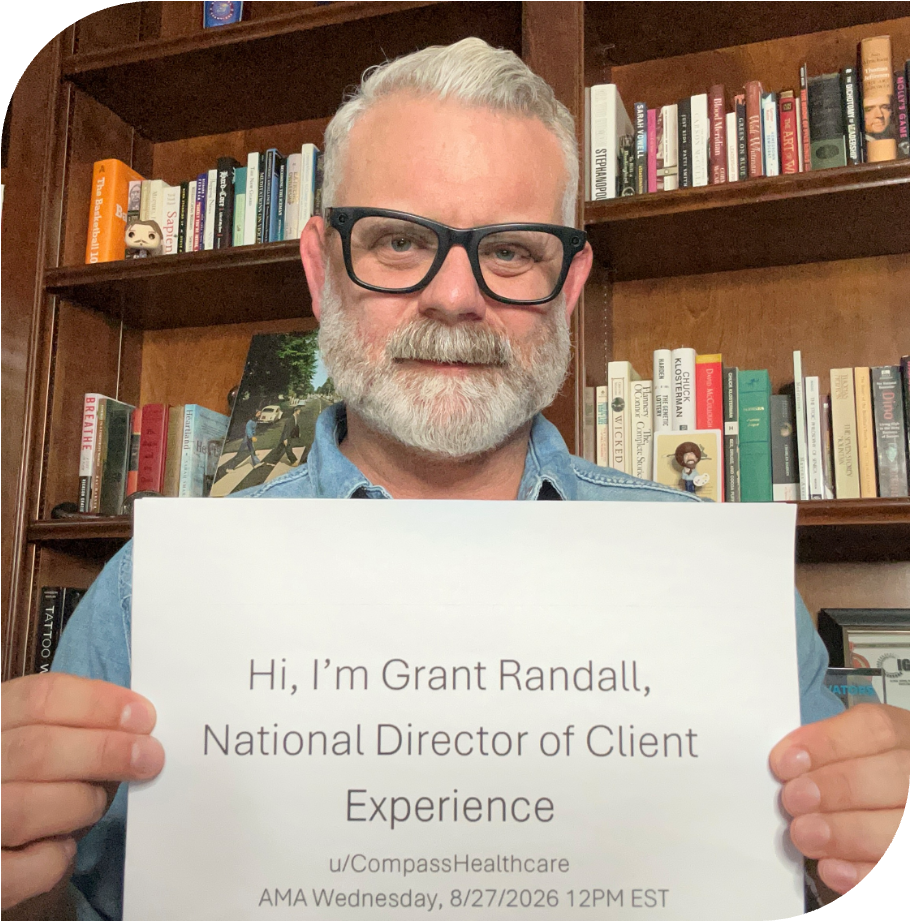
In honor of Kids Eat Right Month, Grant Randall, National Director of Client Experience at Compass Healthcare, recently hosted an Ask Me Anything (AMA) discussion about pediatric dining, family-centered care, child-focused communication, and how support services help create more welcoming healthcare environments for young patients and their families.
One theme emerged: the pediatric patient experience is shaped by every interaction throughout a hospital stay.
From dining and transportation to registration and clinical care, every team member influences family-centered care..
FAMILY-CENTERED CARE AND THE PEDIATRIC PATIENT EXPERIENCE
A child’s hospitalization affects the entire family. Parents may be focused on their child’s care while also trying to support siblings, manage work and household responsibilities, and navigate an unfamiliar environment.
Randall explained that families may feel isolated during this experience, even when a network of people is ready to help. Nurses, physicians, patient transporters, registration teams, support-service associates, and other hospital professionals all contribute to the circle of care surrounding a child.
Recognizing that network can help families feel less alone. When parents feel comfortable asking questions and accepting support, the hospital experience can become more manageable for everyone involved.
Compass Healthcare also focuses on what Randall calls “recurring moments,” or situations that happen often enough for teams to anticipate them and create thoughtful responses.
Sibling movie nights, teaching kitchens, and game nights can give siblings something special to look forward to while offering parents a brief opportunity to rest. For families experiencing longer stays, parent date nights, scavenger hunts, meals, and hospital walks can create meaningful moments of connection.
These experiences do not have to be elaborate. Their value comes from showing families that someone recognizes what they are going through and is thinking about their well-being.
MAKING FOOD MORE APPROACHABLE FOR CHILDREN
Food can shape a child’s hospital experience, but unfamiliar meals may feel intimidating in an unfamiliar environment. Pediatric dining helps children feel more comfortable and supports a positive pediatric patient experience.
Randall noted that children often become interested in food before they ever taste it. Colorful presentations, playful designs, and familiar ingredients can make meals feel more approachable.
Hands-on experiences can also encourage curiosity. Teaching kitchens, bedside chef visits, and hospital gardens allow children to see, touch, and participate in the food preparation process. These opportunities can help make food feel less intimidating while giving children a sense of control during a time when many decisions are being made for them.
Even picky eaters can be introduced to new foods without pressure. The goal is to create positive experiences that invite children to explore.
Sometimes, that exploration leads to unexpected requests. When asked about the most unusual meal a child had requested, Randall shared that one child asked for spaghetti with strawberries. Since there were no allergy or dietary concerns preventing the meal, the team prepared it. The child loved it so much that the chef later tried making it at home with his own children.
Listening to children and adapting to their needs helps create a positive pediatric patient experience.
SUPPORTING SAFE AND INCLUSIVE DINING
Pediatric dining must also account for allergies, celiac disease, cultural preferences, religious practices, and other dietary needs.
Hospitals can support children with celiac disease when clear systems are in place for communication, ordering, preparation, and cross-contact prevention. The process begins when clinicians document a child’s dietary needs in the medical and foodservice systems. The system then prevents families from ordering unsuitable menu items.
At Morrison Healthcare, the kitchen team verbally confirms celiac orders and uses dedicated, color-coded utensils and equipment to help prevent cross-contact. These safeguards are important for children with celiac disease, as well as those with food allergies and other dietary restrictions.
Communication must continue throughout the entire process. A physician or nurse must document the child’s needs, the foodservice system must receive the information, and the kitchen team must follow the appropriate procedures every time.
When clinical and foodservice teams communicate effectively, children’s dietary needs can be supported safely and consistently.
USING RESEARCH TO MAKE CARE LESS FRIGHTENING
Child-focused care is grounded in research across pediatrics, child psychology, pain management, communication, environmental design, and other disciplines.
Randall explained that the goal is to understand how children experience healthcare and use proven approaches to make procedures clearer, safer, and less frightening.
Age-appropriate explanations are one example. A child may be told honestly that a procedure will feel like a pinch, why it is needed, and what will happen next. Clear communication can help replace fear of the unknown with a better understanding of what to expect.
These principles also apply when supporting children with autism and other sensory or communication needs. Hospital teams can receive training to recognize different responses to sensory input, facial expressions, and body language, allowing them to adapt how they communicate with children and families.
CREATING CONNECTION ACROSS DEPARTMENTS
Children and families interact with many different teams during a hospital stay. When those interactions feel disconnected, the experience can become confusing and overwhelming.
According to Randall, the best way to create a more coordinated journey is to build genuine relationships across departments. Nurses, housekeepers, dining associates, transporters, and other team members may have different responsibilities, but families notice when those teams know and respect one another.
Strong relationships also help teams solve problems more effectively. When employees have already built trust, they can communicate quickly, support one another, and avoid making a stressful situation more difficult for a child or family.
At Texas Children’s Hospital, teams created a golf-themed event that brought departments together. Environmental services team members dressed as caddies, service dogs wore matching uniforms, and a putting green and prizes traveled through the units.
The event gave children a joyful break, but it also strengthened relationships among employees, families, and caregivers. Those connections continued beyond the event, helping team members work together more effectively when new challenges arose.
THE POWER OF GENEROSITY
One of the greatest surprises Randall has experienced in pediatric care is how willing people are to give their time and energy to children and families.
During a Ghostbusters event at Nemours Children’s Hospital in Delaware, two local cosplay groups that considered themselves rivals both arrived in full costume to brighten children’s day. They set aside their differences and continued participating in events together.
Stories like this demonstrate how pediatric environments bring out generosity in employees, families, visitors, and community members. Everyone has an opportunity to contribute to a child’s experience, whether through a carefully prepared meal, a kind interaction, a welcoming environment, or an unexpected moment of joy.
LOOKING AHEAD
A positive pediatric patient experience is built through many small, intentional actions.
It can be found in a meal prepared with a child’s dietary needs in mind, a transporter who takes time to explain where they are going, an environmental services associate who helps make a room feel welcoming, or a team that creates a special activity for siblings and parents.
These moments may seem simple, but together they help children and families feel seen, supported, and less alone.
Reflecting on the AMA, Randall emphasized that pediatric care is strengthened when every member of the healthcare team recognizes their role in the family’s experience. Through collaboration, thoughtful communication, and a commitment to creating moments of comfort, support services help make hospitals more welcoming places for children and the people who care for them.
To view the full AMA session and explore our other AMAs, visit our Reddit page.