

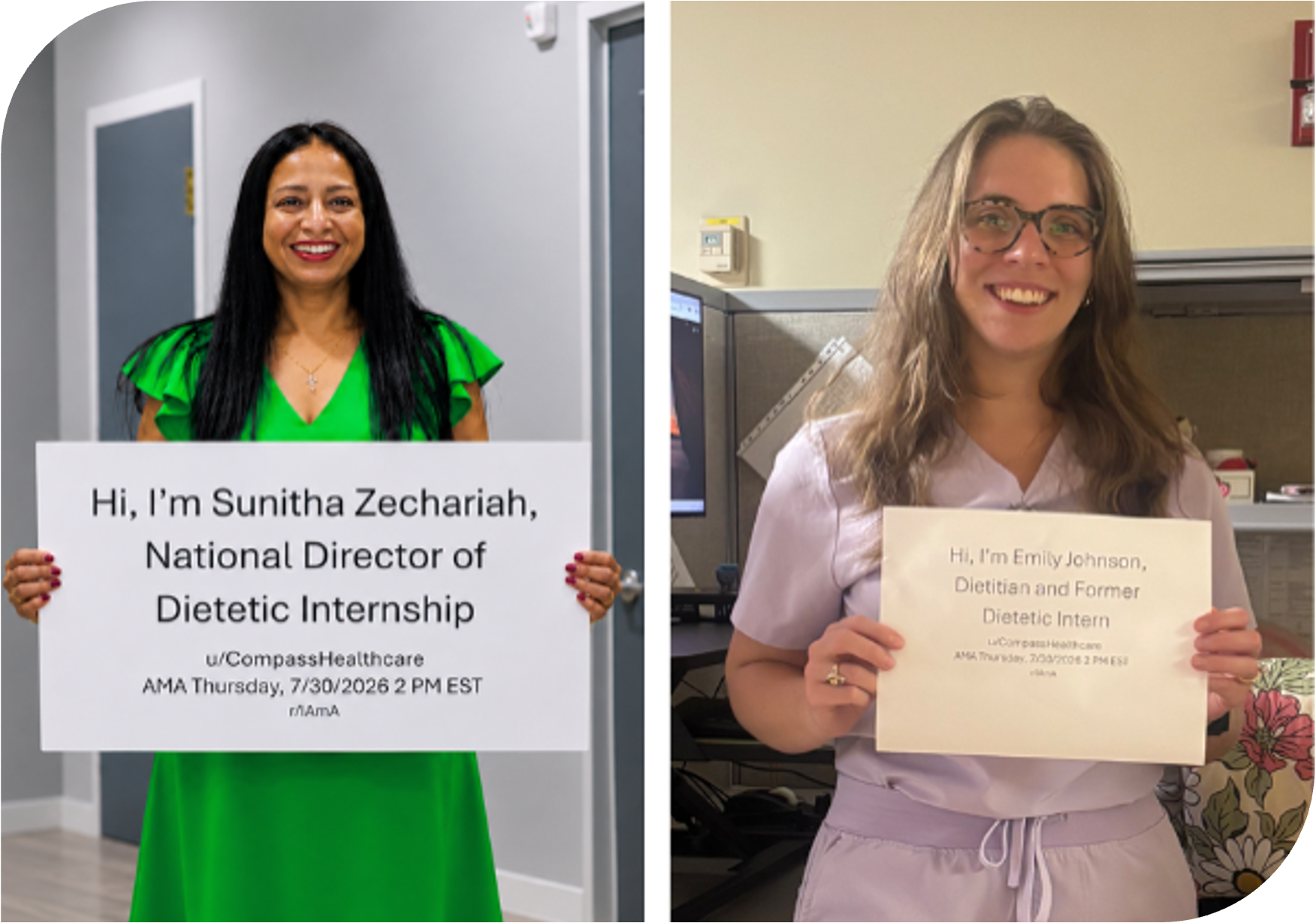
When Sunitha Zechariah, National Director of the Dietetic Internship at Morrison Healthcare, hosted a recent Ask Me Anything session, she was joined by Emily Johnson, a Morrison Healthcare registered dietitian and former dietetic intern. Together, they discussed the experience of preparing for a career in dietetics through a dietetic internship.
Participants asked about clinical rotations, mentorship, professional development, and the transition from intern to registered dietitian. While the conversation covered many aspects of the program, one theme consistently emerged: a strong dietetic internship helps students turn academic knowledge into the confidence and judgment required for professional practice.
Becoming a registered dietitian requires several educational milestones, including required coursework, a master’s degree, supervised practice, and the registration examination. The internship connects those requirements to the daily work of the profession, giving students an opportunity to apply what they have learned while receiving guidance from experienced dietitians.
For future dietitians, that experience can shape more than their clinical skills. It can help them understand the range of careers available, identify the settings that interest them, and begin building the professional relationships that support long-term growth.
How a Dietetic Internship Bridges Education and Practice
The shift from the classroom to professional practice requires students to apply nutrition science in situations that are complex, personal, and constantly changing. Dietetic internships provide a supervised environment where students can begin making that transition.
In a clinical rotation, an intern may review patient charts, assess nutrition needs, develop plans of care, provide education, and document recommendations in the medical record. These responsibilities allow students to practice combining technical knowledge with communication, organization, and clinical reasoning.
As interns become more comfortable, they gradually manage more patients and work with greater independence. The progression helps students build experience without losing the support and oversight that are essential while they are still learning.
This hands-on preparation became especially valuable for Johnson. Because she accepted a position at the same facility where she completed her internship, she entered her role already familiar with the policies, workflows, and team. The environment was familiar, but her responsibility had changed. As a registered dietitian, she could sign her own notes and take ownership of decisions she had previously made under supervision.
Structure Creates More Time for Learning
A dietetic internship requires coordination across rotation sites, preceptors, schedules, assignments, and program requirements. When students must arrange those elements independently, administrative responsibilities can compete with the time and attention needed for learning.
Morrison Healthcare’s Dietetic Internship coordinates rotation sites, secures preceptors, and provides students with a structured schedule before the program begins. This approach allows interns to focus on supervised practice rather than managing the logistics of their own placements.
Through Morrison Healthcare and the broader Compass Healthcare network, the program can offer placement opportunities across the country. Interns gain experience in clinical nutrition, foodservice management, community nutrition, research, and specialty areas while learning how dietitians contribute across different environments.
The program also gives students opportunities to explore individual interests. Johnson, for example, pursued rotations focused on food insecurity. Experiences like these can help interns connect their professional training with the populations and issues they may want to serve throughout their careers.
Mentorship Strengthens Professional Confidence
One of the most important parts of supervised practice is the opportunity to learn how experienced dietitians think. Preceptors help interns evaluate information, explain their reasoning, communicate with patients and healthcare teams, and adjust their approach when needs change.
Reviewing patient assessments and chart notes with a preceptor creates space for questions and feedback. These discussions help students understand why a recommendation is appropriate, where their reasoning can improve, and how to communicate decisions clearly.
Exposure to several preceptors also shows interns that there is not one professional style they must copy. Each dietitian may approach communication and clinical reasoning differently. Learning from those perspectives helps interns develop an approach that is informed by experience while still becoming their own.
Mentorship also helps students strengthen the professional habits that extend beyond nutrition knowledge. Communication, initiative, leadership, interpersonal skills, and time management all influence how successfully an intern navigates rotations and prepares for a full-time role.
Broad Experience Helps Students Find Their Direction
Dietetics includes career paths in clinical care, foodservice operations, community nutrition, public health, research, and other specialties. Students may enter an internship with one area in mind and discover new interests as they gain experience in different settings.
That is why varied preparation can be valuable even before the internship begins. Work in foodservice, volunteer experience, research, clinical exposure, and opportunities to shadow dietitians can help students understand the profession and enter supervised practice with useful context.
Professional relationships are another important part of that preparation. Connecting with practicing dietitians, universities, internship programs, and professional organizations can help students learn about different roles and find guidance as they move through each stage of the process.
These experiences do more than strengthen an application. They help students recognize the work that holds their interest and the skills they still need to develop.
Creating a Pathway From Internship to Career
A strong internship can make the transition into employment more direct. Many Morrison Healthcare interns receive job offers before graduation or shortly after passing the registration examination, sometimes from the same location where they completed a rotation.
According to Zechariah, approximately 50 to 60 percent of the program’s interns remain within the Compass family of companies. Graduates may join Morrison Healthcare or pursue opportunities with other Compass Healthcare sectors, including TouchPoint, Unidine, and Compass Community Living.
Eligible graduates who join Morrison Healthcare may also receive reimbursement of up to 50 percent of their internship tuition, with a maximum benefit of $5,250. Eligibility requirements apply.
Since the program began, Morrison Healthcare’s Dietetic Internship has graduated approximately 850 students who went on to become registered dietitians. Each graduate represents the progression the program is designed to support: from student, to intern, to practicing professional.
Looking Ahead
Reflecting on the discussion, Zechariah emphasized how rewarding it is to see interns grow into colleagues. Johnson’s transition from student to registered dietitian is one example of how supervised practice can prepare graduates to contribute with confidence.
Preparing future dietitians requires more than meeting educational requirements. Students need opportunities to practice, ask questions, receive feedback, and understand how their knowledge applies across the profession. When supervised practice combines structure, mentorship, and meaningful experience, interns can enter the workforce with a clearer understanding of the work and the role they want to play within it. A structured dietetic internship gives students the supervised practice, mentorship, and experience needed to succeed as registered dietitians.
For students preparing to begin that journey, the AMA highlighted several practical steps: gain experience in a variety of settings, stay organized, build professional relationships, and remain open to learning from every rotation.
To view the full AMA session and explore our other AMAs, visit our Reddit page.